
Have you ever noticed that some flows start immediately, where other flows seem to take a while before they get started. Different types of triggers work in different ways. The flow team has now made it easier to recognise the different type of triggers used by your flows.
Of course, you could always have a look at the flow connector documentation and find out how your flow is triggered. But it might not always be easy to find out when your trigger is kicked off.
When you look at your My flows overview in Microsoft Flow, you will find a number of different type of flows.
- Scheduled
- Automated
- Instant
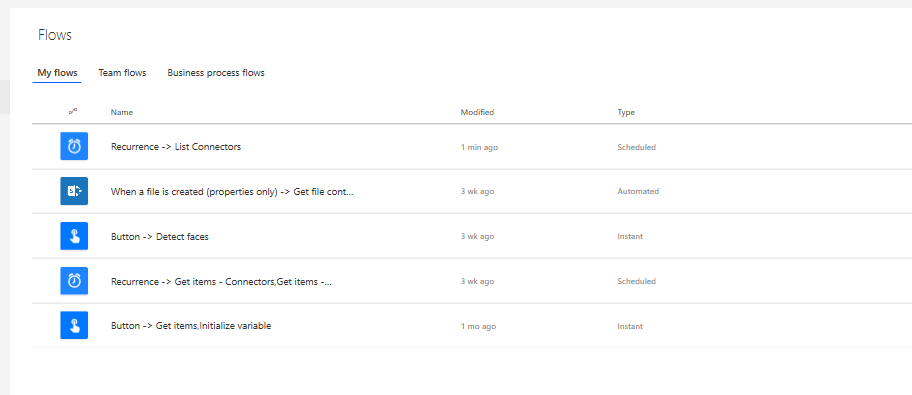
What does this mean?
Scheduled Flows
Scheduled flows are not triggered by an event on the data, but they simply run when a scheduled time arrives. You can compare this with running scheduled tasks on your PC or servers. This could help you get rid of those on-premises servers that run that monthly or daily task.
Instant Flows
Instant flows are triggered by a person. Typically pressing button within an app, that would make this flow start. This of course also includes all the on selected items triggers that can for example be found within the SharePoint or Excel connectors.
Automated Flows
Automated flows are started by an event on your data. For example when you create or update a list item in SharePoint your flow will start. This is the most common type of trigger used by most of the connectors.
Pieter Veenstra

Is your business still running on paper trails, sprawling Excel files, or ageing Access databases? There's a better way — and I can show you exactly what it looks like. I'm the Technical Director of Vantage 365, a Microsoft solutions consultancy working with clients across the UK, the Netherlands, and worldwide. For over 30 years I've been turning messy, manual business processes into clean, automated systems that save time, reduce errors, and give teams the visibility they need to make better decisions. SharePains is not just any blog run by a Microsoft MVP. Have you ever used Try-Catch in Power Automate? The original post about Try-Catch in Power Automate can still be found on this site, https://sharepains.com/2018/02/07/try-catch-finally-in-power-automate-flow/ Or have you ever used the Pieter’s method to avoid variables and speed up your flows? https://sharepains.com/2020/03/11/pieters-method-for-advanced-in-flows/ You can contact me using contact@sharepains.com


I’m unable to add intant flow to an solution. Do you how to fix this?
Hi Kannabiran,
Is this an already existing flow that you are trying to add? Or is this a new flow that is already solution aware? https://docs.microsoft.com/en-us/power-automate/create-flow-solution